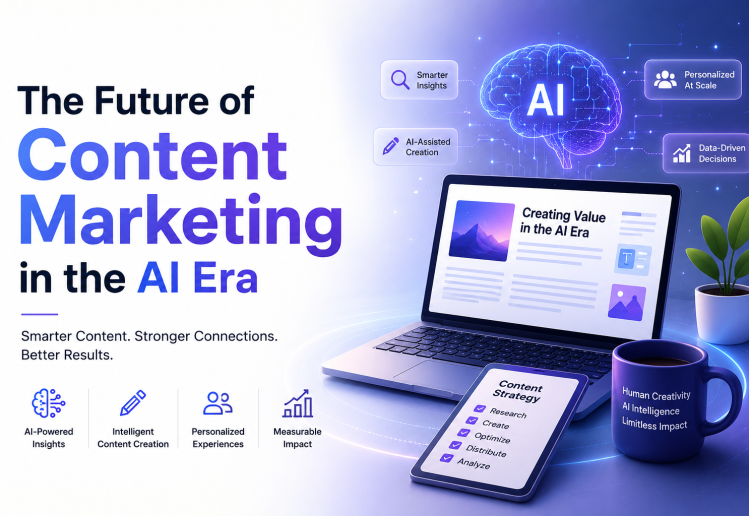
Content marketing is undergoing a major transformation due to the rise of artificial intelligence. In today’s digital landscape, businesses are no longer relying only on traditional content creation methods. Instead, they are integrating AI-powered tools to generate ideas, write drafts, optimize SEO performance, and analyze audience behavior in real time. This shift has made content production faster, more scalable, and more data-driven than ever before. However, despite these advancements, human creativity, emotional intelligence, and storytelling still remain essential for building trust and maintaining a strong brand identity.
One of the most significant advantages of AI in content marketing is its ability to improve speed and efficiency. Marketers can now produce blogs, videos, email campaigns, and social media posts in a fraction of the time it previously took. AI tools can instantly generate outlines, suggest topics, and even create full drafts based on prompts. This allows marketing teams to focus more on strategy, refinement, and audience engagement rather than spending excessive time on manual content creation. As a result, businesses are able to scale their content efforts and maintain a consistent online presence across multiple platforms.
Why Content Marketing is Evolving
The evolution of content marketing is largely driven by changing audience expectations. Modern users demand personalized, relevant, and immediate content experiences. They no longer engage with generic messages; instead, they expect brands to understand their preferences and deliver tailored information. AI plays a crucial role in meeting these expectations by analyzing user data, browsing behavior, and engagement patterns to predict what type of content a user is most likely to interact with.
Several key changes are shaping the industry. Automated content generation is reducing the time required to produce high-quality material. AI-powered SEO optimization ensures that content is better aligned with search engine algorithms and user intent. Predictive content recommendations allow platforms to suggest articles, videos, or products that match user interests. Additionally, real-time performance tracking enables marketers to adjust their strategies instantly based on engagement metrics.
AI in Content Creation
AI has become an important assistant in the content creation process. It helps marketers write blog drafts, generate attention-grabbing headlines, develop video scripts, and even build structured content calendars. This support reduces creative pressure and allows teams to produce large volumes of content consistently.
However, AI-generated content still requires human refinement. While AI can produce grammatically correct and structured text, it often lacks emotional depth, originality, and brand-specific voice. Human editors play a critical role in reviewing, refining, and enhancing content to ensure it aligns with the brand’s personality and communicates effectively with the target audience. The best results come from combining AI efficiency with human creativity.
Content Personalization
Personalization has become one of the most important aspects of modern content marketing. AI enables brands to analyze large amounts of user data and deliver highly customized content experiences. This includes personalized product recommendations, targeted email campaigns, and dynamic website content that adapts based on user behavior.
As a result, engagement rates and conversion rates have significantly improved. When users feel that content is specifically designed for them, they are more likely to interact with it, trust the brand, and eventually make purchasing decisions. This level of personalization was nearly impossible at scale before AI technologies became widely available.
SEO in the AI Era
Search engine optimization has also evolved with the integration of AI. Search engines now prioritize content based on user intent rather than simple keyword matching. This means that high-quality, informative, and contextually relevant content performs better than keyword-stuffed articles.
AI tools assist marketers in understanding search intent more accurately and identifying trending topics. They help optimize content structure, readability, keyword placement, and semantic relevance. As a result, businesses can create more targeted and effective content that ranks higher in search results while also providing real value to readers.
Challenges
Despite its advantages, AI in content marketing also brings several challenges. One major concern is over-reliance on AI-generated content, which can lead to a lack of originality and creativity. When too many brands use similar tools, content may start to feel repetitive and less authentic.
Another challenge is content saturation. As AI makes content creation easier, the internet is becoming increasingly crowded with similar types of information. This makes it harder for individual brands to stand out. Additionally, there is a risk that human creativity may be reduced if marketers depend too heavily on automation tools instead of developing unique ideas.
Future Trends
The future of content marketing will likely involve deeper collaboration between AI and humans. Rather than replacing marketers, AI will act as a powerful assistant that enhances productivity and decision-making. Voice search and visual search optimization will become more important as users change the way they interact with digital platforms.
Interactive and immersive content formats such as AR, VR, and AI-generated experiences will also gain popularity. At the same time, hyper-personalized content delivery will become the standard, where every user receives a unique content journey based on their preferences and behavior.
Conclusion
Content marketing in the AI era is all about balance. While AI brings speed, automation, and data-driven insights, human creativity ensures authenticity, emotion, and trust. Businesses that successfully combine these two strengths will be able to create powerful content strategies that stand out in an increasingly competitive digital world.