Have you ever seen a shiny temple statue and wondered, “How did this flat metal become something so detailed?” It almost feels like magic. But it is not magic at all.
It is a special skill called Repoussé Art.
In Lalitpur, Nepal, skilled artists still use this ancient method to create beautiful religious designs. They turn simple metal sheets into detailed gods, goddesses, and sacred decorations. This art has survived for hundreds of years.Let’s explore how this amazing craft works and why it is still important today.
What Is Repoussé Art?
Repoussé Art is a technique where artists shape metal from the back side to create designs on the front.Think of it like pushing soft dough from behind to make a shape appear on top. But instead of dough, artists use metal sheets.This technique is a part of metal embossing, which means creating raised designs on flat surfaces.
In Nepal, this skill is mainly used for:
- Temple decorations
- Religious statues
- Sacred wall panels
- Ritual objects
It is a big part of Nepal traditional crafts.
The Home of Repoussé Masters: Lalitpur
A City Full of Art
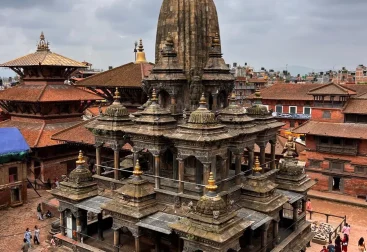
Lalitpur, also called Patan, is famous for its rich art culture. Streets are filled with temples, carvings, and workshops. Here,Lalitpur craftsmen keep old traditions alive through their hands.They learn the skill from their parents and grandparents. It is not just a job. It is a family tradition.
Newari Metalwork Tradition
The Newar community is known for its deep artistic history. Their Newari metalwork is respected around the world. They create detailed designs without machines. Every line is shaped by hand.
This makes each artwork unique and special.
How Repoussé Art Is Made Step by Step
Creating Repoussé Art takes patience and focus. It is slow but beautiful work.
Let’s break it down into simple steps.
Step 1: Drawing the Design
First, the artist draws the design on paper or directly on metal. It could be a Buddha, a goddess, or a temple pattern. This step is like planning a drawing before coloring it.
Step 2: Softening the Metal
The metal sheet is made soft by heating it.
This makes it easier to shape. Without this, the metal would be too hard.
Step 3: Shaping From the Back
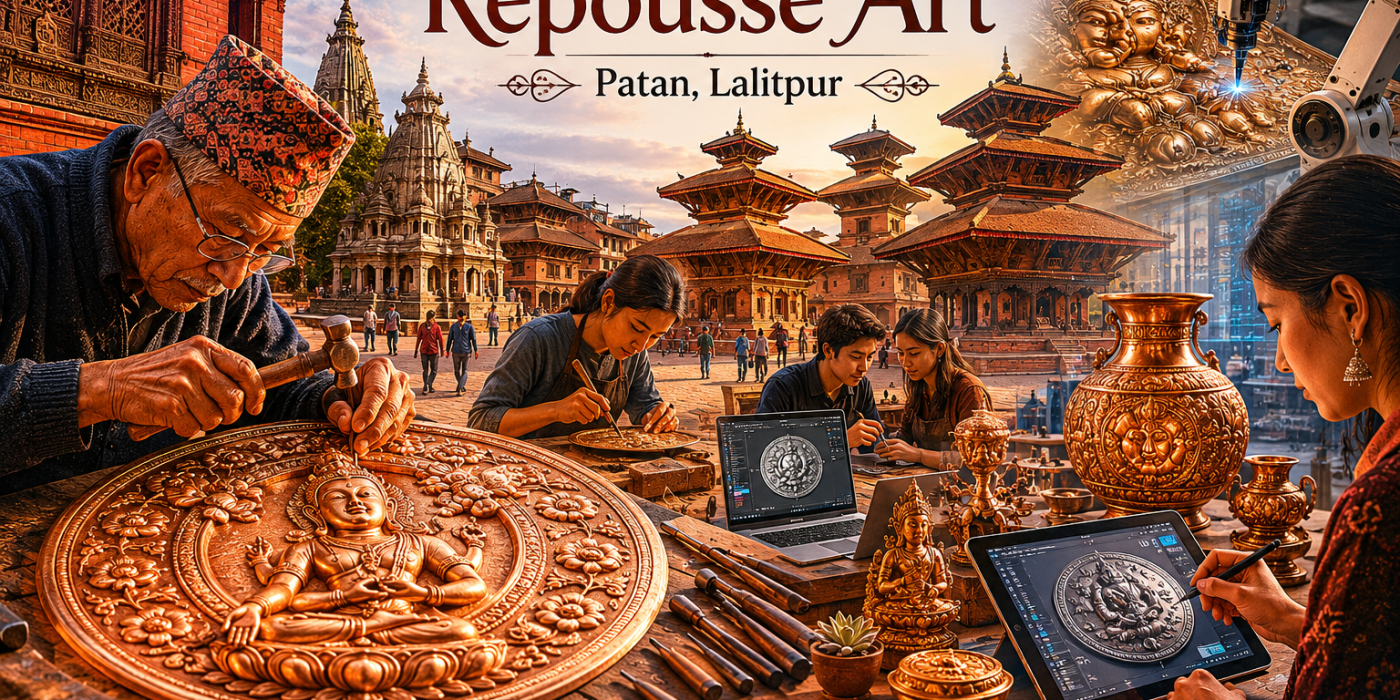
Now comes the main magic. The artist uses special tools to gently push the metal from the back side. This creates raised designs on the front. This process is the heart of Repoussé Art.
Step 4: Detailing From the Front
After shaping, the artist turns the metal over. Now they add fine details like:
- Eyes
- Jewelry
- Clothing patterns
- Facial expression
This makes the artwork come alive.
Step 5: Polishing the Final Art
Finally, the metal is cleaned and polished. It shines brightly and looks like gold.This finished piece becomes handmade religious art used in temples and homes.
Why Repoussé Art Is So Special
It Uses Only Human Skill
No machines are used. Everything is done by hand. This makes each piece full of personal effort and care.
It Keeps Culture Alive
This art is part of old traditions passed through generations.Without it, many cultural stories could be lost.
It Shows Deep Patience
Making one artwork can take days or even weeks. Artists must work slowly and carefully. This teaches us the value of patience and focus.
Tools Used in Repoussé Art
Artists use simple tools, but they are very powerful in skilled hands. Some common tools include:
- Hammers – to shape metal
- Chisels – to carve details
- Punch tools – to create patterns
- Anvils– solid surface for support
Even though tools are simple, the results are amazing.
Challenges Faced by Lalitpur Craftsmen
Even talented artists face problems today.
- Expensive Materials: Metal is costly. This makes production expensive.
- Less Interest from Young People, Many young people prefer modern jobs.So fewer learn this traditional skill.
- Machine-Made Competition: Factories produce cheap decorations quickly. But machine-made items do not have the soul of handmade art.
Why Repoussé Art Still Matters Today
Even with challenges, this craft is still very important.
1. It Protects Heritage: It keeps ancient traditions alive in modern times.
2. It Supports Families: Many families in Lalitpur depend on this craft for income.
3. It Inspires the World: Tourists and collectors admire this unique art form.
They love the beauty of Nepal traditional crafts.
Fun Facts about Repoussé Art
Here are some interesting facts you might enjoy:
- Some artworks take over a month to complete
- Each piece is 100% handmade
- Designs are often inspired by religion
- No two pieces are exactly the same
- It is one of the oldest metal art forms in the world
How Repoussé Art Connects to Spiritual Life
In Nepal, art and spirituality are closely connected. Many artworks show gods and goddesses. People believe these bring peace and protection. So handmade religious art is not just decoration. It has deep meaning.
The Future of Repoussé Art
The future depends on young artists. if they learn and continue this skill, the tradition will survive. Schools and workshops are now helping new learners. Tourism also helps support this craft. So the future still looks bright.
Conclusion
Repoussé Art is more than just metal shaping. It is a living tradition in Lalitpur that connects history, culture, and creativity. Skilled Lalitpur craftsmen continue to turn flat metal sheets into beautiful divine art. Their work shows the power of patience, skill, and tradition. Even today, this art remains an important part of Newari metalwork and Nepal traditional crafts.